Lichen sclerosus is a chronic skin condition that predominantly affects the genital and anal areas, causing discomfort and significant impact on quality of life if left untreated. For women in Toronto and the surrounding area, early identification and intervention are crucial for effective management and improved long-term outcomes.
Understanding the early signs of lichen sclerosus empowers women to seek professional help before symptoms escalate. At FemRenew, we are committed to providing up-to-date information and compassionate care, supporting our patients through every step of their health journey.
Recognizing Early Signs: What Women Should Watch For

Early detection of lichen sclerosus is essential for minimizing discomfort and preventing complications. The most common initial symptoms include persistent itching and irritation in the vulvar or perianal region. These may be accompanied by white, patchy areas of skin that appear thinner than usual. Some women might notice small tears, bruising, or soreness after sexual activity or routine hygiene.
It is important not to dismiss subtle changes in the skin’s appearance or texture, especially if symptoms recur or progressively worsen. In many cases, early-stage lichen sclerosus may resemble other dermatological conditions, making professional evaluation critical. Women experiencing these symptoms in Toronto should consider scheduling a consultation at a specialized clinic for an accurate diagnosis.
When Is It Time to Make the Call?
One of the most common questions women ask themselves is whether their symptoms truly warrant a visit, or whether they should simply wait and see. It is a fair question, and the honest answer is that a brief, isolated itch usually isn’t cause for concern. What changes the calculus is persistence and pattern.
As a practical guide, it is generally worth reaching out to a healthcare provider when itching or discomfort lingers for more than a couple of weeks, when symptoms keep returning after seeming to clear, or when over-the-counter remedies bring little or no lasting relief. The same is true when you can see or feel a change in the skin itself—pale or whitened patches, thinning, a crinkled texture, or small splits that recur in the same place. Discomfort during urination or intimacy, or any unexplained soreness or tearing, also deserves attention. You never need to be certain something is wrong before booking an appointment; uncertainty is precisely what an evaluation is for. We would always rather a woman come in and be reassured than wait silently with a worry that turns out to be treatable.
Why Early Diagnosis Matters for Women’s Health

Timely identification of lichen sclerosus can significantly improve the effectiveness of treatment and reduce the risk of long-term complications. Left untreated, the condition may lead to scarring, narrowing of the vaginal opening, and an increased risk of secondary infections or, rarely, vulvar cancer. Early intervention allows for a broader range of non-surgical management options and supportive therapies.
At FemRenew, we utilize advanced diagnostic techniques and a multidisciplinary approach to ensure every woman receives personalized care. For additional information on how lichen sclerosus is diagnosed and treated, consult the overview provided by the National Institute of Arthritis and Musculoskeletal and Skin Diseases.
What to Expect During Your Evaluation
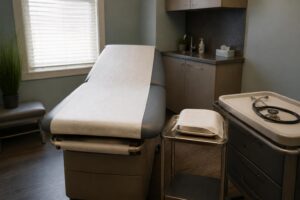
For many women, the unfamiliarity of the appointment itself is part of what causes hesitation. Knowing what a visit typically involves can take much of that apprehension away. While every clinic differs, the general shape of an evaluation for a vulvar concern is reassuringly straightforward.
A visit usually begins with a conversation. Your provider will ask about your symptoms—when they started, how they have changed, what makes them better or worse—as well as your medical history, including any autoimmune conditions and the products you use. This is a good moment to share any notes you have kept and to ask the questions that have been on your mind. From there, a gentle visual examination of the affected area allows the provider to look for the characteristic changes associated with lichen sclerosus and to distinguish it from look-alike conditions. In some cases, to confirm the diagnosis and rule out other concerns, a small skin sample, or biopsy, may be recommended; your provider will explain this clearly if it applies to you.
Throughout, comfort, privacy, and consent guide the process. You are always free to ask questions, to understand each step before it happens, and to take the time you need. Far from being something to dread, a thoughtful evaluation is often the moment women describe as a relief—the point at which uncertainty gives way to understanding and a clear path forward.
A little preparation can make the visit feel smoother still. Before your appointment, it can help to jot down when your symptoms began, how they have changed, what you have already tried, and any questions you don’t want to forget to ask. Making a note of your medical history, including any autoimmune conditions or relevant family history, and the soaps, detergents, or intimate products you use regularly gives your provider useful context. There is no need to do anything elaborate to prepare your body for the examination; in fact, avoiding heavily scented products beforehand is usually all that is suggested. Arriving with your observations written down means nothing important gets lost in the moment, and it helps the conversation focus on what matters most to you.
Non-Surgical Approaches for Managing Early Lichen Sclerosus
When caught early, lichen sclerosus can often be managed successfully with non-surgical treatments. Topical corticosteroids are the most commonly prescribed therapy, helping to reduce inflammation and relieve itching. In some cases, platelet-rich plasma (PRP) treatments or laser therapies may be recommended as adjuncts for women who do not respond to standard care.
Supporting pelvic floor health and practicing gentle hygiene are also important components of a comprehensive management plan. By working closely with an experienced women’s health team, patients can benefit from education and tailored strategies designed to protect vulvar tissue and prevent recurrence. For a deeper dive into non-surgical therapies available at FemRenew, visit our Lichen Sclerosus page or learn more about our clinic.
Choosing a Toronto Clinic for Lichen Sclerosus Care
Finding a clinic that specializes in women’s health and lichen sclerosus is key to ensuring optimal care. FemRenew offers a confidential, supportive environment where individual needs are prioritized. We understand the sensitivity surrounding vulvar conditions and provide treatment options that respect each woman’s comfort and lifestyle.
Our clinic is conveniently located at 4025 Yonge Street, Suite 215, Toronto, and serves women from across the GTA. For general resources and support, consider reviewing the latest guidance from the American Academy of Dermatology Association.
Frequently Asked Questions
What are the first symptoms of lichen sclerosus?
The earliest symptoms often include persistent itching, discomfort, and the appearance of white, smooth patches of skin in the vulvar area. Some women may also notice minor tears or soreness, especially after sexual activity.
Can lichen sclerosus be cured if detected early?
Lichen sclerosus is a chronic condition, but early diagnosis and appropriate treatment can control symptoms, prevent progression, and minimize complications. Ongoing management is typically necessary for long-term wellness.
Is lichen sclerosus contagious?
No, lichen sclerosus is not contagious and cannot be spread through sexual contact or physical touch. Its exact cause is not fully understood, but it is believed to involve immune system factors.
If you suspect you may be experiencing early signs of lichen sclerosus, contact FemRenew at (416) 924-4666 or visit our contact page to schedule a confidential consultation. Our team is here to provide the support and expertise you need for optimal women’s health in Toronto.